
Lossless Scaling CD Key
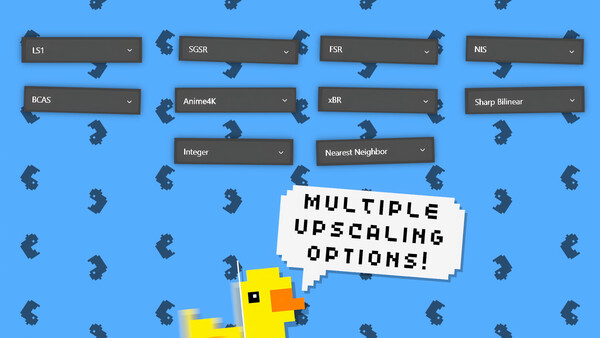
Lossless Scaling is a frame-generation and upscaling tool for games, smoothing visuals with LSFG 3-Frame Generation and improving quality or performance with LS1, FSR, NIS, XBR, Integer, Anime4K. Supports dual GPUs, per-game profiles, online games, Windows 10+ (Linux port).
Looking for the best price for Lossless Scaling? Compare offers from 6 stores on CheckGamePrices to find the cheapest Steam key available. Right now, the lowest price is 6.99$ at Steam.
Current Lowest Price
6.99$

Visit store
Steam
6.99$

Kinguin
7.54$

Eneba - Lossless Scaling Steam Key (PC) GLOBAL
7.97$

GameSeal - Lossless Scaling (PC) Steam Gift - GLOBAL
8.77$

K4G
11.56$

Gamivo - Lossless Scaling Global
18.09$

Release Date
28 Dec, 2018
Publisher/Developer
THS
Reviews
Steam: 90.50% positive (34856/38514)
Metacritic: -
Game Tags
System Requirements
Minimum:
- Requires a 64-bit processor and operating system
- OS: Windows 10 1903 x64
- Graphics: Intel HD Graphics
- DirectX: Version 11
Recommended games




Lossless Scaling Steam Price History Chart
Current Steam price: 6.99$
Lowest Steam price ever: 3.49$ — 2026-08-24
Lowest Steam price ever: 3.49$ — 2026-08-24
Loading Lossless Scaling price history chart...
Lossless Scaling Reviews Summary
Users wrote
Reviewers largely praise Lossless Scaling and frame generation for boosting FPS and smoothing gameplay across many titles, especially older or poorly optimized games and emulators. Many users find it affordable and versatile, usable on laptops, desktops, and handhelds like the Steam Deck, sometimes enabling games that were previously unplayable. Some drawbacks noted include input lag and artifacts at higher frame generation multipliers, with results depending on GPU headroom and game compatibility. A few reviews mention limited Linux support and prefer native options on Windows, but overall it is seen as a useful tool to revive older games and stretch hardware.
Last updated: 2026-03-06
Users wrote
Advantages mentioned by the majority
Less frequently mentioned disadvantages
Comparisons to other games
Lossless Scaling description
Lossless Scaling — Smooth visuals and flexible upscaling for games
Lossless Scaling is a powerful tool that enhances your gaming experience by delivering smoother motion through LSFG frame generation and optional quality or performance improvements with a suite of scaling algorithms and specialized machine learning models, including LS1. It is designed to work with most games, even those lacking built-in frame generation or scaling, as well as with other applications and a broad range of hardware.
LSFG 3 Frame Generation
LSFG creates additional frames to smooth out motion, making games look noticeably steadier. It’s ideal for titles without native frame-generation solutions, for games that require new hardware, and for older games or emulators with locked frame rates.
The LSFG system uses a proprietary machine learning model developed specifically for Lossless Scaling, with ongoing updates to maximize quality and performance. A dedicated performance model supports low-power GPUs, ensuring broad hardware compatibility.
Modes and Scaling
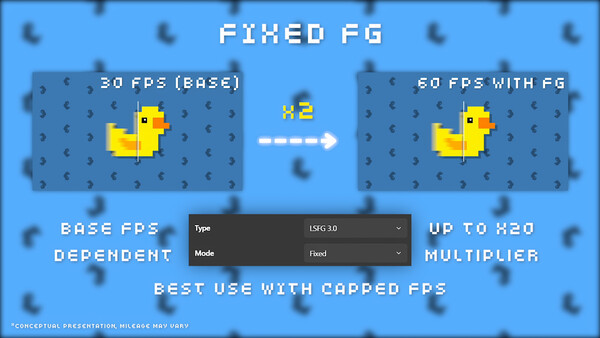
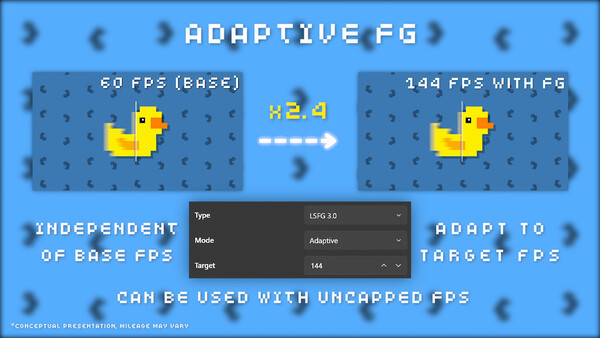
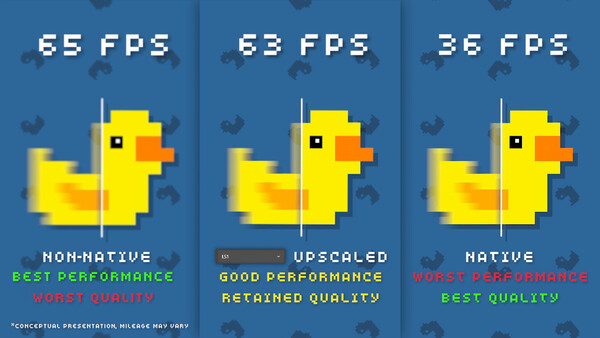
Fixed mode multiplies the original frame rate, while Adaptive mode lets you target a specific frame rate that may not be a clean multiple of the source. Scaling improves performance by downscaling the original resolution and applying upscaling to restore visual clarity, which is particularly beneficial for older titles and pixel-art games that lack modern resolutions or fullscreen support.
- LSFG and scaling choices for modern titles: LS1, FSR, NIS
- Pixel-art friendly options: Integer, XBR
- Cartoon/Anime rendering: Anime4K
Performance and Hardware
A key feature is Dual GPU Support, which offloads heavy computations to a second GPU. This helps preserve the game's original frame rate and can reduce latency, keeping gameplay responsive.
To maintain smooth operation, keep GPU resources free where possible; otherwise Lossless Scaling may impact the game's native frame rate. The tool supports a wide range of hardware configurations and includes a separate mode tailored for lower-power GPUs.
Compatibility and Customization
Lossless Scaling is compatible with online games, with community feedback indicating safety against anti-cheat conflicts in many cases, though this cannot be guaranteed—use discretion.
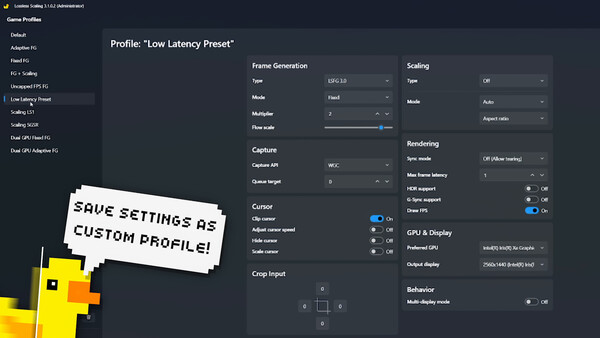
Customize per-game settings with Game Profiles. You can save profiles for individual games or groups, and they automatically apply when the executable is detected, ensuring consistent, automated operation.
Requirements and Platforms
Supported modes include windowed and borderless fullscreen; exclusive fullscreen may work only if the output is configured for a second display.
Windows 10, version 2004 or newer is supported. Linux users can access LSFG via a community-driven port (lsfg-vk project).