
Assassin’s Creed® Brotherhood CD Key
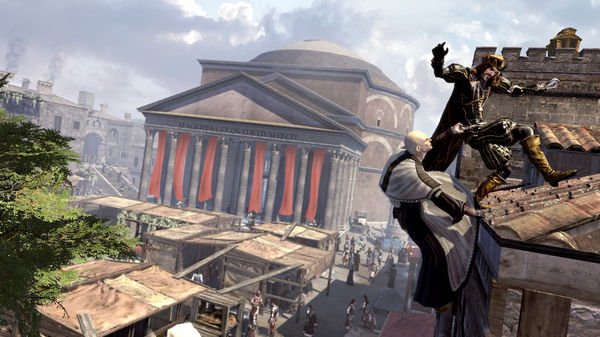
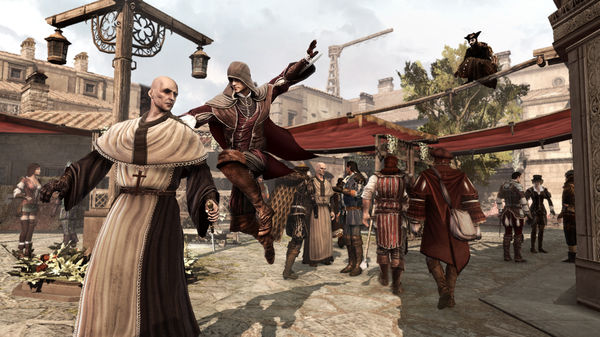
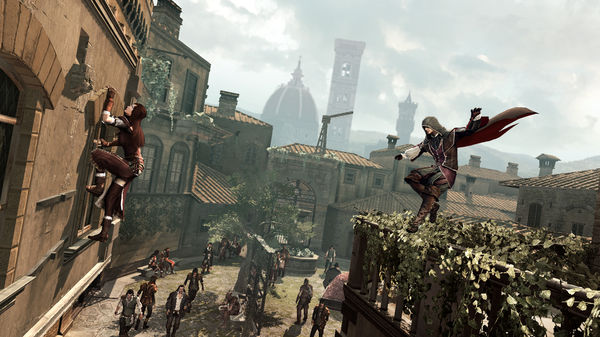
Step into the shoes of Ezio, a legendary Master Assassin, battling the Templar Order in corrupt Rome. Command a Brotherhood, deploy secret weapons, and engage in 15+ hours of story-driven gameplay. Experience multiplayer action with unique characters and sharpen your skills against players worldwide. Join the Brotherhood!
Looking for the best price for Assassin’s Creed® Brotherhood? Compare offers from 3 stores on CheckGamePrices to find the cheapest Steam key available. Right now, the lowest price is 5.47$ at GameSeal, which is 73% cheaper than the current Steam price (19.99$).
Current Lowest Price
5.47$

Visit store
GameSeal - Assassin's Creed: Brotherhood (PC) Steam Gift - GLOBAL
5.47$

Steam
19.99$

Kinguin
29.21$
Release Date
22 Mar, 2011
Publisher/Developer
Ubisoft Montreal, Ubisoft
Reviews
Steam: 87.99% positive (22202/25232)
Metacritic: 88/100
Game Tags
System Requirements
Minimum
- OS *: Windows® XP (32-64 bits) /Windows Vista®(32-64 bits)
- Processor: Intel Core® 2 Duo 1.8 GHZ or AMD Athlon X2 64 2.4GHZ
- Memory: 1.5 GB Windows® XP / 2 GB Windows Vista® - Windows 7®
- Graphics: 256 MB DirectX® 9.0–compliant card with Shader Model 3.0 or higher (see supported list*)
- DirectX®: 9.0
- Hard Drive: 8 GB
- Sound: DirectX 9.0 –compliant sound card
- Peripherals: Keyboard, mouse, optional controller
- Supported Video Cards: ATI® RADEON® HD 2000/3000/4000/5000/6000 series, NVIDIA GeForce® 8/9/100/200/300/400/500 series
- Note* * This product does not support Windows® 98/ME/2000/NT
Requires a Uplay account.
Recommended games



Assassin’s Creed® Brotherhood Steam Price History Chart
Current Steam price: 19.99$
Lowest Steam price ever: 4.99$ — 2026-10-08
Lowest Steam price ever: 4.99$ — 2026-10-08
Loading Assassin’s Creed® Brotherhood price history chart...
Assassin’s Creed® Brotherhood Reviews Summary
Users wrote
Most reviews praise Assassin’s Creed Brotherhood as a strong follow‑up to AC II, with smoother combat, a richer open world, and the new Brotherhood system that lets you recruit and deploy allies. The city of Rome is described as large, detailed, and lively, offering meaningful progression through rebuilding districts and Towers. Ezio’s maturation and leadership arc are highlighted as a peak moment for the character and the series. However, several reviews complain about persistent bugs, DRM/launcher issues with Ubisoft Connect, and some feeling the game plays more like a well‑made expansion than a full new entry.
Last updated: 2026-03-08
Most Mentioned Advantages
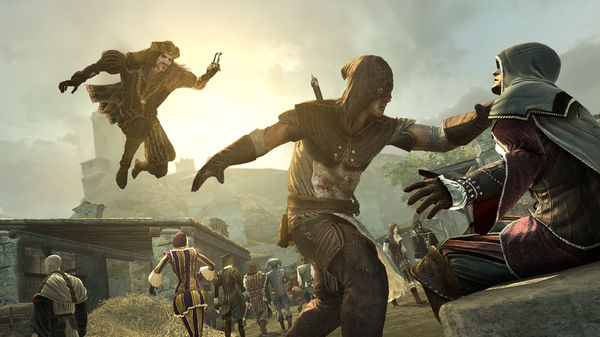
- Refined combat and Brotherhood system (20 mentions) - Combat is smoother than in AC II with faster pacing and more fluid enemy encounters. The new Brotherhood mechanic allows you to recruit assassins, upgrade them, and call them into battles, adding strategic depth. The chain‑kill style integrates well with this system and makes combat feel dynamic. These changes give Ezio more options and make fights feel more cinematic.
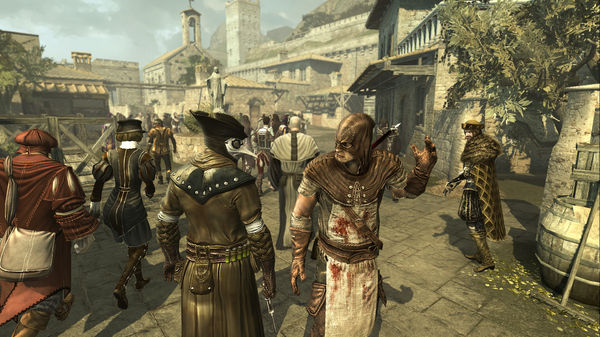
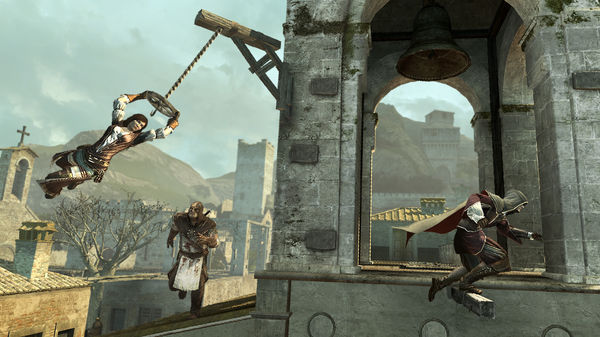
- Expansive and detailed Rome open world (16 mentions) - Rome is a large, richly designed city that feels alive and varied. The open world is filled with side activities, towers to conquer, and districts to rebuild, which provides a sense of meaningful progression. The map design and historical landmarks are frequently praised for atmosphere and scale. This setting supports long, engaging exploration sessions.
- Ezio’s mature arc and leadership (15 mentions) - Ezio’s character develops into a confident leader and mentor, which many fans consider the peak of his story. The narrative emphasizes Ezio’s growth and his role as head of the Brotherhood, not just a lone assassin. This shift adds emotional weight and scale to the game’s plot. Players often cite Ezio’s arc as a major strength of Brotherhood.
- Expanded side content and new missions (12 mentions) - The game adds fresh side content such as Da Vinci’s war machines and city management tasks that feel integrated into the Rome setting. The recruitment system and side missions offer variety beyond main story beats. These elements add longevity and replay value for many players. Overall, side content is frequently highlighted as a standout feature.
- Improved visuals and Renaissance atmosphere (12 mentions) - Graphics and art direction show clear improvements over AC II, with detailed architecture and atmospheric lighting. The soundtrack and sound design contribute to the Renaissance mood. Players often note that the visuals hold up well even years after release and help immerse them in the era.
Most Mentioned Disadvantages
- Ubisoft Connect/Uplay launcher issues (18 mentions) - Several reviews complain about the required Ubisoft Connect launcher for single‑player play, which can cause login problems and frustrate players. The launcher’s online check and account restrictions disrupt the experience, making it hard to start or continue playing. This DRM approach is repeatedly cited as a major negative. Many players suggest it hurts accessibility and reliability, especially on Steam.
- Bugs and performance problems (14 mentions) - The game is frequently described as buggy, with crashes, stutters, and occasional game freezes. Some issues are tied to synchronization mechanics or late‑game sequences, and others relate to legacy DirectX or frame rate behavior on PC. While not universal, these problems recurred across many reviews and can disrupt immersion.
- 100% synchronization can be punishing (10 mentions) - Perfect synchronization conditions are often seen as lengthy and tedious, forcing players to replay long segments if a misstep occurs. Several players report frustration with the memory sequences and the difficulty of achieving 100% sync. This mechanic is cited as a source of artificial difficulty and time sink.
- Feels like a DLC rather than a full new game (8 mentions) - A subset of reviews describe Brotherhood as AC II with a large open world and more systems, rather than a completely new experience. The sense of novelty can be muted for players who expected a more standalone evolution. This sentiment is expressed by several reviewers who still enjoy the game but view it as more of an expansion.
- Repetitive tasks and mission variety concerns (7 mentions) - Some reviewers note that main story pacing is solid but many side activities feel repetitive or derivative. The open world can overwhelm with busywork, and certain mission structures are viewed as stale. While not universal, this critique appears in multiple opinions.
Compared Games
- Assassin’s Creed II (18 mentions) - Many reviewers compare Brotherhood to AC II, praising Brotherhood for refining mechanics and introducing the Brotherhood system, while noting that the story isn’t as tightly focused as AC II. Several see Brotherhood as a stronger combat and open‑world experience, but some miss the emotional impact of AC II’s narrative. Overall, AC II is frequently used as a baseline for evaluating Brotherhood’s improvements and shortcomings.
- Assassin’s Creed Revelations (6 mentions) - A portion of reviews contrast Brotherhood with Revelations, sometimes preferring Revelations as a stronger closing chapter in Ezio’s trilogy, while Brotherhood is viewed as a transitional title with new features that aren’t fully developed. The comparison highlights differing pacing and emphasis on narrative versus systems. Some players feel Revelations surpasses Brotherhood in certain aspects.
Users wrote
Advantages mentioned by the majority
Less frequently mentioned disadvantages
Comparisons to other games
Assassin’s Creed® Brotherhood description
Assassin’s Creed® Brotherhood
Step into the shoes of Ezio Auditore, a legendary Master Assassin, as he embarks on a gripping journey through Rome, the heart of power, greed, and corruption. In his relentless quest against the formidable Templar Order, Ezio must eradicate the corrupt tyrants that plague the city. Success hinges not just on brute strength but also on leadership, as he commands an entire Brotherhood of Assassins who stand ready to join the fight.
For the first time, players can engage in an award-winning multiplayer mode, where they can choose from a variety of unique characters, each equipped with signature weapons and assassination techniques. The immersive, story-driven single-player campaign offers over 15 hours of gameplay.
Unleash an array of secret weapons, from poison darts to advanced flying machines, to swiftly eliminate your foes. Utilize your resources to revive the city, rally its citizens, and unlock new factions and missions. Join the Brotherhood and change the fate of Rome.