
Human.exe CD Key
Current Lowest Price




Release Date
Publisher/Developer
Reviews
Human.exe description
Human.exe
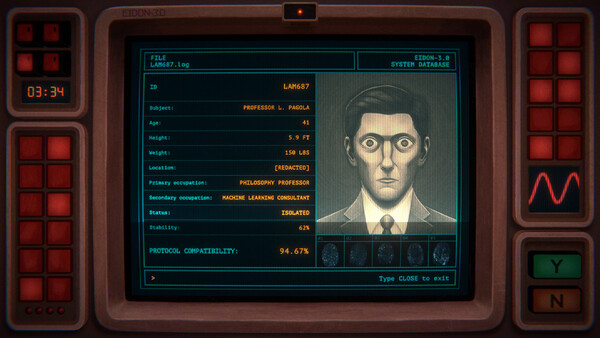
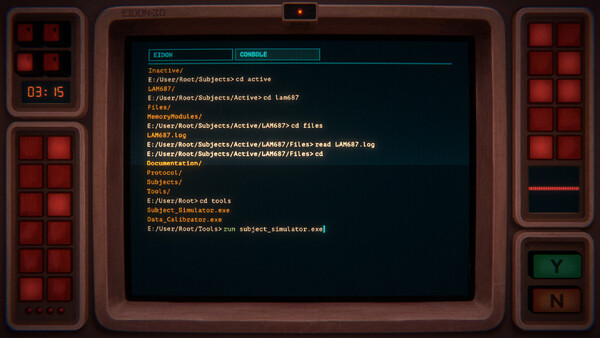
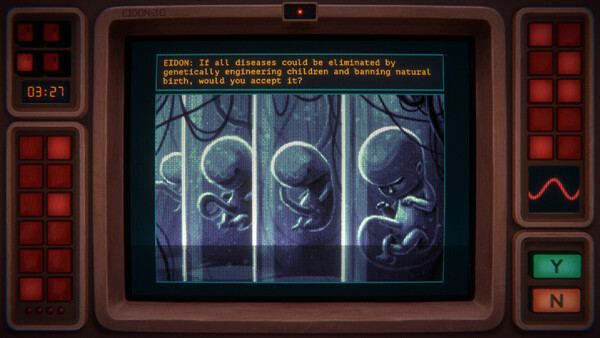
Human.exe situates you inside the digital mind of a philosophy professor, isolated by an Autonomous Governance System named EIDON-3.0 to test the boundaries of human morality. The terrain is a terminal-based interface where you type system commands to navigate, access restricted files, and shape the professor’s answers through carefully posed ethical prompts.
The core premise is blunt: there are no right answers. Every decision you make is recorded to assemble a final moral profile. Your choices determine how the professor thinks, and how the evaluation interprets your own ethical stance. The stakes are explicit: the process measures judgment under pressure, not correctness.
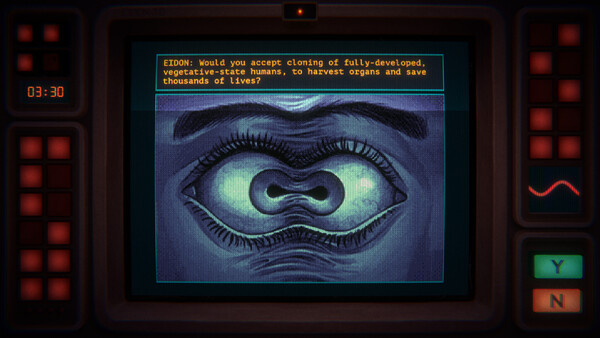
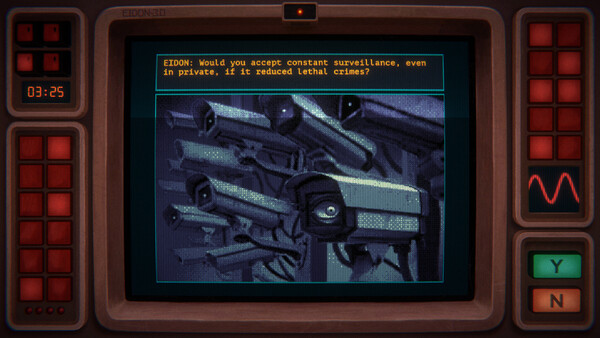
Your role is to interact with the terminal, selecting moral positions in response to a sequence of dilemmas. You must determine the professor’s responses to EIDON’s inquiries, revealing the limits and contradictions of human reasoning. You also review feedback on the subject’s logic and reasoning to illuminate how ethical arguments unfold under scrutiny.
Mechanically, you type commands to navigate the interface, open restricted files, and manage system states. Each action advances the timeline of a single continuous session and reshapes the simulated consciousness you are evaluating. The flow emphasizes process over solution: traceable steps, evolving justifications, and the way a mind defends its choices when pressed by an algorithmic judge.
The evaluation is designed as a closed test: a 30-minute sequence with a fixed pace and strict consequences. Termination cannot be forced from outside the system; noncompliance is described as fatal within the narrative framework. The outcome emerges from the terminal states you reach, not from any predetermined ending.
By design, your outputs act as data points for autonomous decision-making research. The final classification assigns you to a moral framework based on your demonstrated reasoning, the patterns of your decisions, and the way you justify your stances under constraint.
In Human.exe, philosophy becomes protocol. Ethics are not abstract questions but live choices reflected back through the professor’s logic. The experience challenges you to consider how a mind negotiates duty, harm, autonomy, and truth when every conclusion is logged and every deviation from expectation alters the course of the evaluation.