
6-7 CD Key
Current Lowest Price


Release Date
Publisher/Developer
Reviews
6-7 Steam Price History Chart
Lowest Steam price ever: 0.65$ — 2026-03-26
6-7 description
6-7
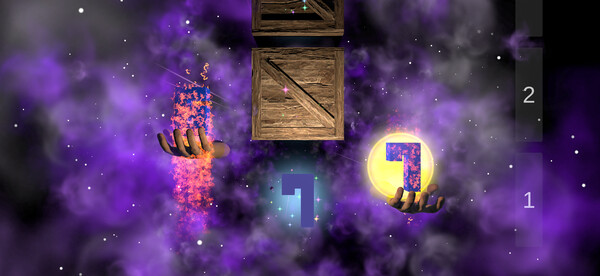
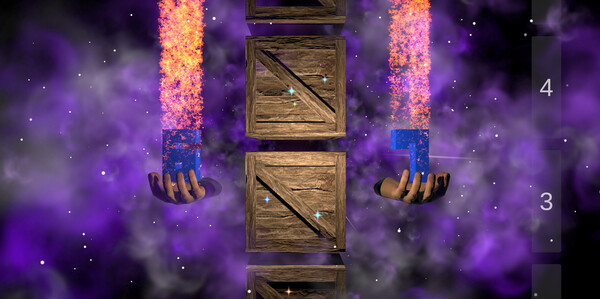
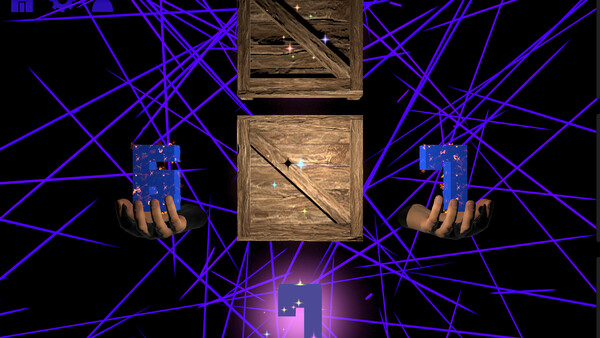
6-7 is a very compact puzzle that centers on two digits: 6 and 7. The entire play space is built around a fixed set of tiles: seven copies of the number 7 and six copies of the number 6.
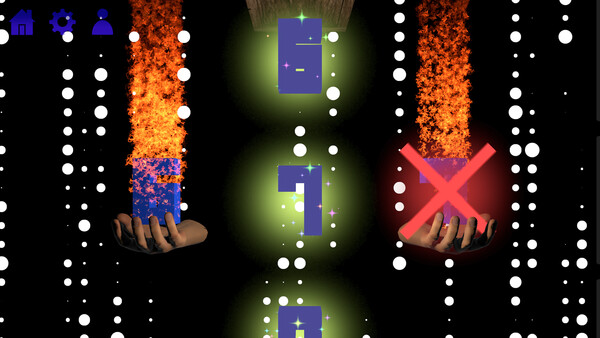
In this game you are asked to guess what the next tile will be. As you proceed, you reveal or place tiles while keeping a strict rule in mind: there must never be three identical numbers in a row. If you ever create the sequence 666 or 777, the run ends or the line stops, and your current attempt is over.
The objective is simple but aims to push you toward the top of the sequence. With a total of 13 tiles to place, the balance between 6s and 7s becomes the limiting factor. The challenge lies not in complex moves or resources but in predicting the order that remains and avoiding a triple-repeat pattern. Can you stretch the sequence high enough to feel like you’ve reached the top of the board?
Gameplay is intentionally minimal. The rules are easy to learn, and the action is quick. There is little to no skill required beyond careful attention to the never-three-in-a-row constraint and your reasoning about the remaining counts of 6s and 7s. Because of this, the experience can be described as a short, flaky puzzle that often feels more frustrating than rewarding. Progress can stall fast, and the mental payoff is tiny, which some players see as part of the charm while others find it unsatisfying.
Whether you’re looking for a tiny brain teaser to fill a minute or two, or you want to test your patience with a rigid constraint, 6-7 fits the bill. The title itself hints at the core dynamic—the tug-of-war between the two digits, 6 and 7, in a sequence that refuses to permit a run of three identical digits. It’s a minimalist game that trades depth for brevity, and its most engaging quality may simply be its odd, almost meditative pace. Keep in mind the fixed counts: seven 7s and six 6s, and the non-three-in-a-row rule, and you’ll approach the top with a clear sense of the challenge you face.
Accessibility and pacing: The game can be played in minutes, and it doesn’t depend on external gimmicks or heavy UI. It suits quick sessions, whether you have a few spare seconds or you’re in the mood for a tiny puzzle before moving on to something bigger. The constraint of no three-in-a-row and the fixed counts of 6s and 7s make each decision meaningful, even as the rewards stay modest. If you enjoy pure logic with minimal interface, 6-7 is worth a try; if you crave rich mechanics or meaningful rewards, this tiny challenge may feel unsatisfying.
Note: remember the 6-7 dynamic—the game name hints at the core duel of digits. If you like tiny logic puzzles with strict constraints and a brief horizon, this compact challenge delivers a concise, focused experience.
Overall, 6-7 offers a brief, stubborn test of foresight and pattern awareness within a fixed 13-tile setup, where no three-in-a-row rule and the balance of two digits shape every move.
Accessibility and pacing: The game can be played in minutes, and it doesn’t depend on external gimmicks or heavy UI. It suits quick sessions, whether you have a few spare seconds or you’re in the mood for a tiny puzzle before moving on to something bigger. The constraint of no three-in-a-row and the fixed counts of 6s and 7s make each decision meaningful, even as the rewards stay modest. If you enjoy pure logic with minimal interface, 6-7 is worth a try; if you crave rich mechanics or meaningful rewards, this tiny challenge may feel unsatisfying.
Keep in mind the core idea: seven 7s and six 6s, and the rule that there must never be three in a row.