
Perceptum CD Key
Current Lowest Price



Release Date
Publisher/Developer
Reviews
Perceptum description
Perceptum
Perceptum is an independent psychological horror game with a playtime of about three hours. It centers on discomfort, uncertainty, and the constant sense that something is always just out of sight.
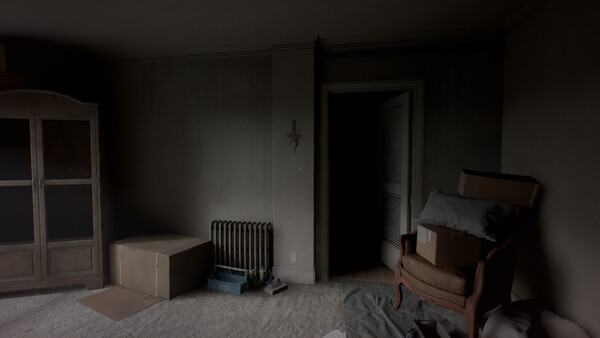
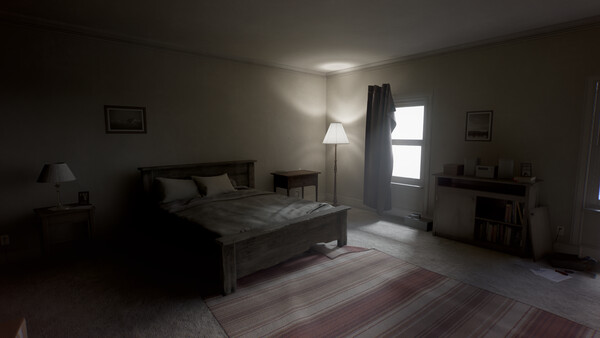
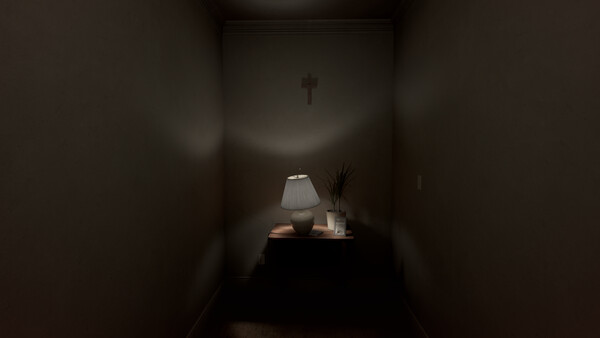
You step into the role of a medium tasked with finding a family that vanished soon after moving into their new home. Inside, the house plays tricks on perception: spaces that should feel familiar twist into the uncanny, silence thickens until it becomes almost tangible, and your senses cannot be fully trusted. Desks that appear to be closed reveal hidden compartments when you glance away; portraits seem to watch you; a staircase creaks with a deliberate rhythm, as if the house itself is listening to your footsteps.
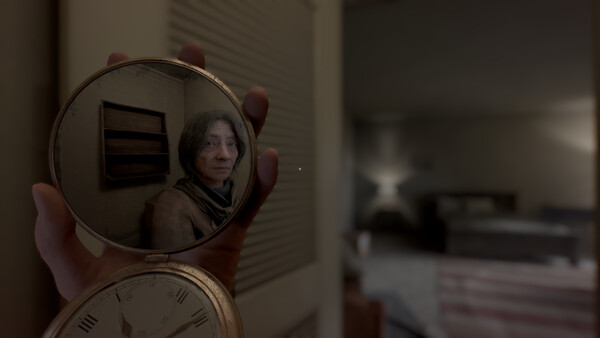
As you move through the warped corridors, you can close your eyes to listen to what lies beyond and you can use a mirror to see what the eye cannot. These tools are your only means to uncover the truth hidden within the walls, and they come with a price: the mirror can reveal unsettling reflections, while closing your eyes leaves you exposed to distorted sounds and distant whispers that guide—and threaten—your progress.
Your Objective is clear within a linear horror experience: a whole family has disappeared with no trace. The police have given up, and you are the last line of inquiry. You must search for clues, assemble fragments of what happened, and let your senses guide you to the truth. Clues appear as fragments of diaries, misplaced objects, and whispers of past conversations. Environmental storytelling and carefully staged puzzles lead you from room to room as you piece together a narrative that grows more unsettling with every step.
Gameplay emphasizes atmosphere over action. The house reacts to your presence, and your only implements are a mirror and the ability to close your eyes. The mirror exposes hidden traces—footprints, distortions in reflections, disturbances that would be invisible to the naked eye—while closing your eyes forces you to rely on altered acoustics and whispered hints. There is no weapon to wield; when a truth finally reveals itself, you cannot fight it—only observe, interpret, and endure.
Stay calm and attentive. If you think you saw or heard something, you probably did. The tension ebbs and flows between quiet, oppressive unease and bursts of fear that erupt from the walls themselves. The sound design uses spatial audio to place whispers, steps, and distant voices around you, heightening the sense that you are not alone. The house is dangerous not because of monsters, but because perception itself is the threat—and the truth lies just beyond what you can see.