

Orbita CD Key
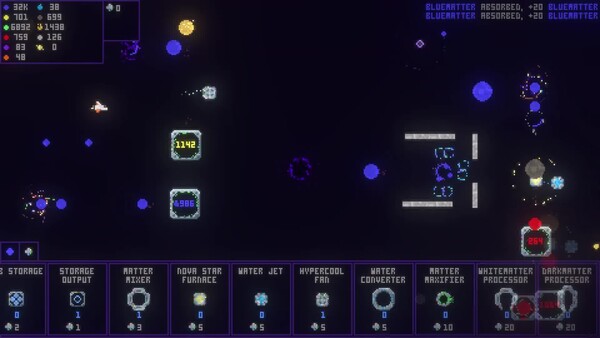
Orbita is a physics-based sandbox where elemental orbs drift in space and react via merging, splitting, and transforming. With no predefined recipes, progress comes from observation and experimentation. Build automated systems—fields, portals, splitters, converters—to mass-produce materials and create self-sustaining reaction loops.
Looking for the best price for Orbita? Compare offers from 1 stores on CheckGamePrices to find the cheapest Steam key available. Right now, the lowest price is 3.99$ at Steam.
Current Lowest Price
3.99$

Visit store



Release Date
13 Mar, 2026
Publisher/Developer
ElJoka
Reviews
Steam: 93.62% positive (44/47)
Metacritic: -
Recommended games


Orbita Steam Price History Chart
Current Steam price: 3.99$
Lowest Steam price ever: 2.99$ — 2026-10-19
Lowest Steam price ever: 2.99$ — 2026-10-19
Loading Orbita price history chart...
Orbita description
Overview
Orbita is a physics-based sandbox game designed for experimentation, discovery, and automation. In a silent, open cosmos, orbs representing different elements drift through space, pulled by gravity, pushed by momentum, and redirected by collisions. The world feels alive as every motion ripples through the physics grid, inviting you to watch, wonder, and improvise.
Dynamic reactions
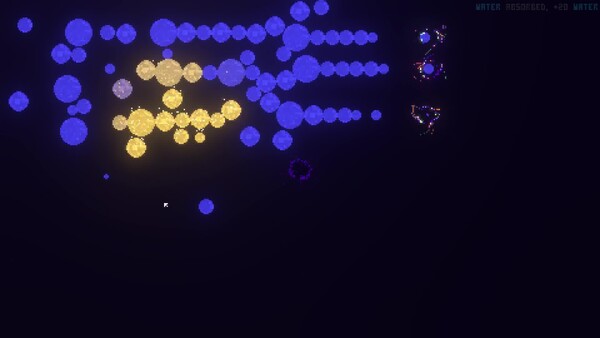
When orbs collide, they can merge into larger forms, split apart, transform into new kinds of matter, or trigger cascades that propagate through the scene. These interactions create entirely new materials with distinct properties that you must learn to understand and harness. There are no predefined recipes shown to the player; progress comes from careful observation, exploratory testing, and learning how different elements influence one another through repeated experiments.
Material behaviors
Materials display diverse behaviors: some emit soft auras that reveal their energy field, others respond to movement, pressure, or proximity, and some effects only surface after a sequence of steps. Certain elements exist only through complex, multi-step processes, rewarding planning and patience as you assemble the right chain of reactions.
Automation and design
As your knowledge grows, you can design automated systems to guide flows and reactions. Use fields to bend trajectories, portals to shuttle orbs across spaces, splitters to divide streams, and converters to transform material states. Combined, these tools let you mass-produce useful materials, stabilize volatile elements, or create self-sustaining reaction loops that keep circulating energy and matter.
Play and progression
Play sessions are intentionally open-ended. You can pause the simulation to analyze a stubborn interaction, tweak gravity, friction, or reaction timing, and then resume to watch how small changes ripple through the system. The sandbox rewards iterative design, letting you refine setups, swap elements, or rewire automation without penalties or rush.
Scale and networks
Endless experimentation can lead to elaborate automation networks. Build fields to shape flows, portals to move resources across distances, splitters to divide streams, and converters to shift material states. These tools enable mass production of materials, stabilization of volatile components, and the creation of self-sustaining loops that circulate energy and matter with minimal input.
Discovery and creativity
Orbita emphasizes discovery over instruction. There are no fixed recipes; every insight comes from observing cause and effect, testing hypotheses, and recording outcomes. The evolving simulation responds to your designs as you push the limits of what the elements can do, rewarding careful planning, robust experimentation, and inventive problem solving.