Europa Universalis V CD Key
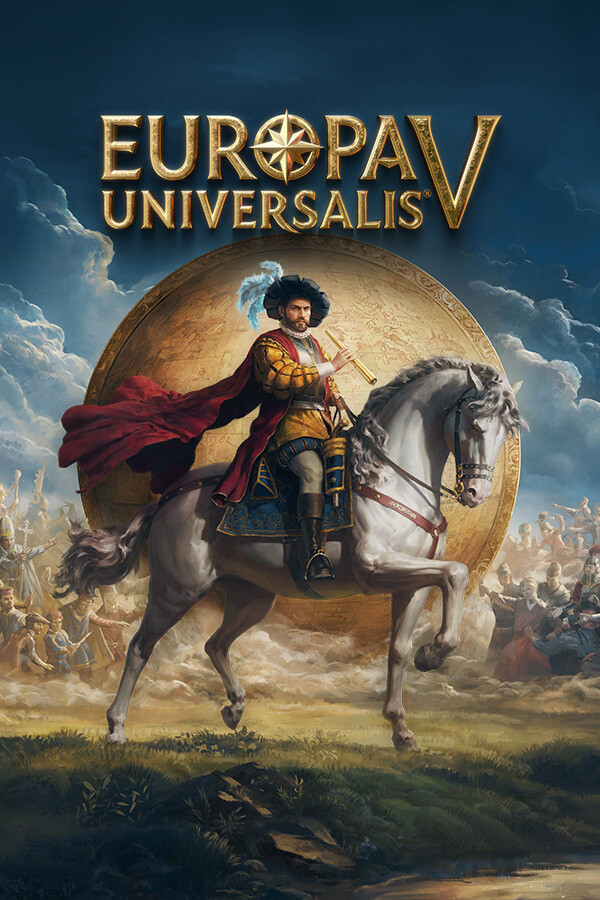
Europa Universalis V is a grand strategy game spanning nearly 500 years, where you lead any of hundreds of nations from the late Middle Ages to the Age of Revolution. Shape history through deep diplomacy, economy, warfare, and logistics, managing populations, cultures, and factions in a detailed living world.
Looking for the best price for Europa Universalis V? Compare offers from 12 stores on CheckGamePrices to find the cheapest Steam key available. Right now, the lowest price is 46.49$ at Loaded, which is 23% cheaper than the current Steam price (59.99$).
Current Lowest Price
46.49$

Visit store
Loaded - Europa Universalis V PC
46.49$

Eneba - Europa Universalis V Steam Key (PC) ROW
46.53$

GameSeal - Europa Universalis V (PC) Steam Key - GLOBAL
48.31$

Instant Gaming - Europa Universalis V
50.55$

Kinguin
51.60$

Fanatical - Europa Universalis V
53.99$

G2A - Europa Universalis V (PC) - Steam Key - GLOBAL
54.30$

Steam
59.99$

GamersGate - Europa Universalis V
59.99$

GreenManGaming - Europa Universalis V
59.99$

GameBillet - Europa Universalis V
59.99$

Gamivo - Europa Universalis V Global
77.10$

Release Date
04 Nov, 2025
Publisher/Developer
Paradox Tinto, Paradox Interactive
Reviews
Steam: 66.05% positive (16107/24386)
Metacritic: -
Recommended games

Europa Universalis V Steam Price History Chart
Current Steam price: 59.99$
Lowest Steam price ever: 53.99$ — 2026-10-08
Lowest Steam price ever: 53.99$ — 2026-10-08
Loading Europa Universalis V price history chart...
Europa Universalis V Reviews Summary
Users wrote
Europa Universalis V is a highly ambitious grand strategy with vast scope and deep systems. Many reviewers praise its potential, map size, and demographic/economic depth, while warning it is hampered by bugs, poor optimization, and clunky UI at launch. Patches and developer responsiveness are often mentioned as positive signs that the game could mature into a top-tier Paradox title. Several reviews compare it to EU4 and Vic3, suggesting patience and future DLC may unlock its best features.
Last updated: 2026-03-09
Most Mentioned Advantages
- Deep, ambitious grand strategy with wide scope (16 mentions) - The game blends diplomacy, economy, warfare, and population dynamics into a single, sprawling system. Players can pursue many different playstyles and long-term goals, making the core concept feel expansive. The breadth of mechanics invites exploration and learning across campaigns. Reviewers consistently highlight its strong foundation and the potential for ongoing growth.
- Automation helps players focus on a subset of gameplay (15 mentions) - Automation can handle tasks like trading, budgeting, and governance, freeing players to concentrate on specific elements they enjoy. This reduces micromanagement and makes complex systems approachable. Players note that automation enables meaningful experimentation without getting bogged down in minutiae. It is seen as a key way to enjoy the game while it matures.
- Huge map with population and economic depth (14 mentions) - The map is expansive and supports a wide range of nations and playstyles. Population and economy mechanics add depth to long-term planning and management. Reviewers feel the scale contributes to a strong sense of immersion and strategic scope. The design supports both tall and wide play over centuries.
- Active development and patches (12 mentions) - Developers are described as responsive and engaged with the community. Regular patches fix issues and refine mechanics, giving players hope for a polished final product. The 1.1 patch is frequently cited as a turning point toward improved stability and balance. This ongoing support is a key positive aspect for many reviewers.
- Mod support enhances playability (6 mentions) - Mods are praised for expanding flavor and variety, offering ways to tailor gameplay beyond base content. The modding scene is viewed as a significant asset that can extend the game’s life. Many players see mods as essential to unlocking more enjoyment as the game evolves.
Most Mentioned Disadvantages
- Bugs and instability at launch (24 mentions) - The game shipped with numerous bugs and ongoing instability across patches. Crashes, save issues, and inconsistent behavior spoil play sessions for many players. Reviewers describe the state as unfinished and in need of substantial polish before a full buy-in is advisable.
- Poor optimization and performance problems (20 mentions) - Many players report heavy lag and slowdowns, especially as campaigns grow. Some runs are barely playable on mid-to-high settings, and overall optimization is a frequent complaint. This hampers enjoyment even for players with powerful hardware.
- Clunky UI/UX (18 mentions) - The interface is described as hard to navigate, with cluttered menus and small text. Important information is often buried behind multiple layers, making it difficult to manage complex systems. Reviewers see the UI as a major barrier to smooth gameplay.
- Balance and AI issues; too complex and not fun (16 mentions) - AI performance and game balance are frequently criticized, with decisions and diplomacy feeling inconsistent. The overall complexity can make the game feel tedious and less enjoyable, especially for new or returning players. Reviewers worry that the current design is not fun despite its depth.
- Lack of mission trees / missing EU4-style rewards (15 mentions) - The removal of mission trees and the limited alternative rewards make progression feel less directed. Situations and events are seen as underwhelming in providing meaning or distinct nation-specific goals. This leads to frustration over a perceived lack of identity for different countries.
Compared Games
- Europa Universalis IV (EU4) (19 mentions) - Many reviewers compare EU5 to EU4, noting EU4 was more polished at launch and offered clearer rewards. They acknowledge EU5 has more depth but miss EU4’s mission trees and ideas, and patch cadence may catch up over time.
- Victoria 3 (7 mentions) - Some players feel EU5 borrows elements from Victoria 3 (population and economy focus) but lacks balance and polish. Vic3 is seen by some as having a more stable or clearer execution in certain aspects.
- Crusader Kings 3 (CK3) (5 mentions) - Some reviews compare EU5’s dynasty and character depth to CK3, noting similarities in how family dynamics affect gameplay.
- Other Paradox titles (CK2, HOI4) (4 mentions) - Several reviews contrast EU5 with CK2/HOI4, implying EU5 has not yet matched those titles at launch and that its patching pace is variable.
- Stellaris (3 mentions) - A few players compare pacing and complexity to Stellaris, highlighting differences in scope and execution.
Users wrote
Advantages mentioned by the majority
Less frequently mentioned disadvantages
Comparisons to other games
Europa Universalis V description
Europa Universalis V is a grand strategy game where nearly five centuries of history unfold in a deeply researched, living world. Choose from hundreds of nations and societies and guide their destinies from the late Middle Ages to the Age of Revolution, shaping politics, war, trade, and culture through decisions that can reinforce history—or rewrite it entirely.
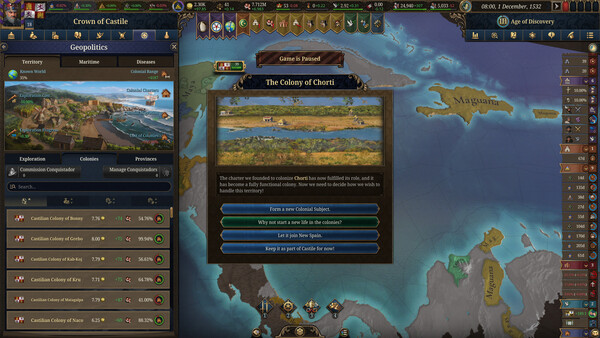
Rule any realm, from great dynasties to fragile city-states, and steer millions through turning points such as the Hundred Years’ War, the Protestant Reformation, and the fall and rise of empires. Historical pressures and opportunities appear organically, but your choices determine the outcome, creating a campaign of shifting alliances, internal struggles, and bold expansion.
Diplomacy is deeper and more demanding. Build coalitions, secure marriages and dynastic influence, extract favors, and apply threats when needed—while remembering that interests change faster than friendships. Skilled negotiation can prevent wars, win them before they start, or set the stage for decisive betrayal.
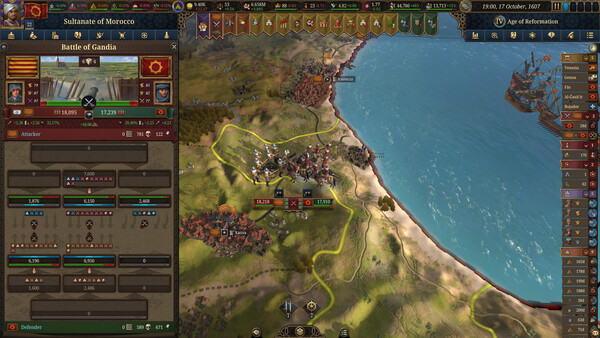
War evolves across the ages in a revised military system with greater logistical depth. Begin with levies and mercenaries, then develop into disciplined standing armies supported by fortresses and capable commanders. Coordinate land and naval forces, adapt to shifting technologies and doctrines, and wage campaigns where preparation and supply matter as much as battlefield victories.
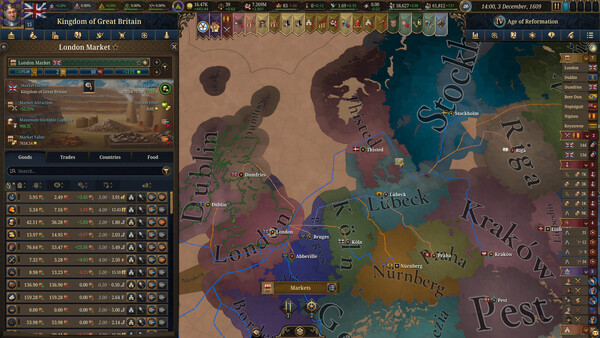
Economy and trade are more sophisticated than ever. Manage production and exchange across a detailed network of routes and markets, dealing in dozens of goods and crops. Invest in feeding and supporting a growing population, exploit new resources, or build prosperity by exporting surpluses to regions that lack them.
Hold your state together at home. Estates and factions compete for influence, forcing you to balance privileges, reforms, and authority. At the same time, shape your nation’s values as new options open with each era: centralize power or empower elites, enforce religious uniformity or practice tolerance, and focus on mass conscription or elite professionalism.
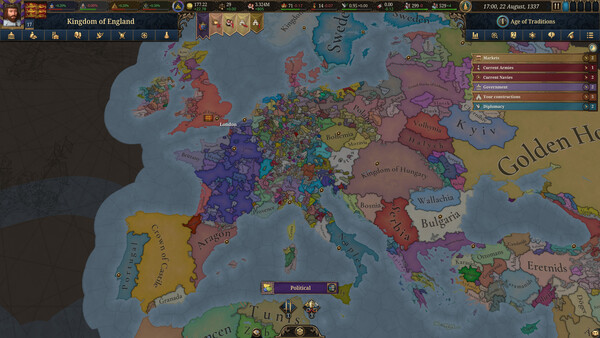
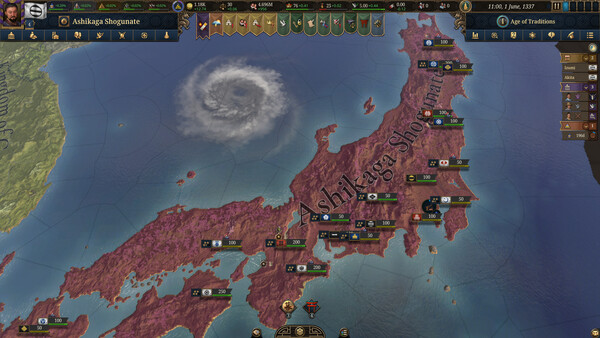
For the first time in the series, populations are represented in detailed form on the map, with provinces divided by culture and faith. How you govern diversity—through integration, compromise, or coercion—will define stability and long-term strength.
With a larger, more detailed world and expanded strategic systems, Europa Universalis V challenges you to surpass the achievements of history’s greatest rulers and build your own vision of a changing globe.